
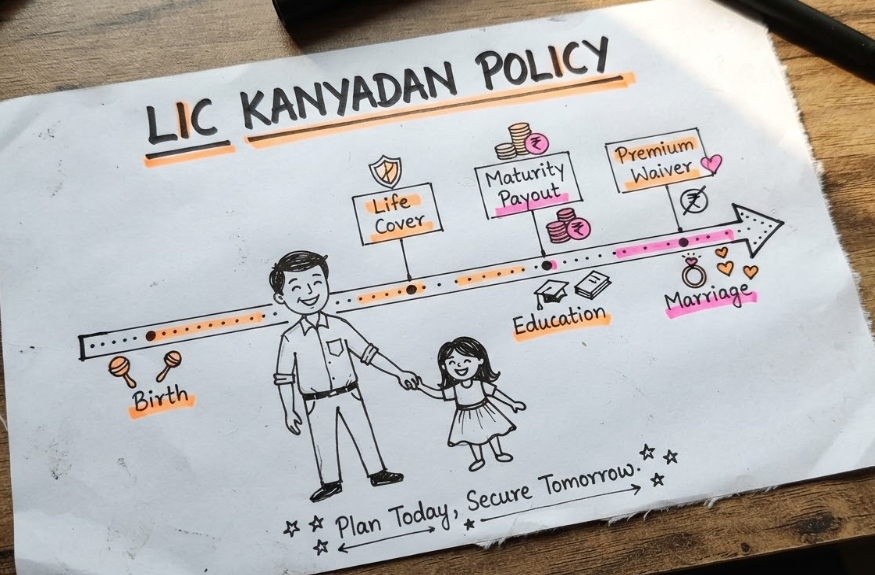
Every parent wants to give their daughter a secure future — one where her education and marriage are never delayed because of money. This is exactly the emotional need that the LIC Kanyadan Policy addresses. Widely discussed among Indian families, the LIC Kanyadan Policy has become one of the most searched financial planning tools for parents raising a daughter.
In this article, we break down everything you need to know about the LIC Kanyadan Policy — what it actually is, its key benefits, eligibility criteria, premium structure, and important facts every parent should be aware of before investing.
Table of Contents
What Is the LIC Kanyadan Policy?
The LIC Kanyadan Policy is not a separate, officially named plan launched by LIC. It is a popular marketing name used by LIC agents for a customized version of LIC’s Jeevan Lakshya plan, structured specifically to help parents save for their daughter’s education and marriage.
The original Jeevan Lakshya (Plan 933) was withdrawn for new sales as part of IRDAI’s revised insurance product regulations. It has since been replaced by LIC’s New Jeevan Lakshya (Plan 733), which offers similar core benefits. If you already hold a Kanyadan/Jeevan Lakshya policy under Plan 933, it continues as per its original terms until maturity.
In simple terms, the LIC Kanyadan Policy combines life insurance protection with disciplined long-term savings, ensuring that a fixed amount is available for your daughter’s future milestones — whether she reaches maturity age, gets married, or pursues higher education.
7 Key Benefits of the LIC Kanyadan Policy
1. Triple Protection Benefit
Unlike a standard endowment plan, the LIC Kanyadan Policy is often highlighted for its triple-benefit structure: a maturity payout, a death benefit for the family, and continuation of the policy even after the policyholder’s demise.
2. Premium Waiver on Death of the Policyholder
If the parent (policyholder) passes away during the policy term, future premiums are waived off, but the policy continues. This means the daughter still receives the full maturity benefit as originally planned, without the family needing to pay further premiums.
3. Lump-Sum Payout at Maturity
On maturity, the policy pays a lump sum, including any accumulated bonuses declared by LIC over the years. This amount can be used for a daughter’s wedding expenses, higher education fees, or as a financial cushion for her future.
4. Life Cover for Financial Security
The policy provides life insurance cover throughout its term, ensuring your family has financial protection in case of an unfortunate event.
5. Tax Benefits Under Section 80C
Premiums paid under the LIC Kanyadan Policy are eligible for tax deduction under Section 80C of the Income Tax Act, up to ₹1.5 lakh per financial year. Additionally, individual life insurance policies benefit from streamlined tax and cost structures, making them more affordable for long-term household budgeting.
6. Flexible Policy Term
The policy term typically ranges between 10 to 25 years, allowing parents to align maturity with their daughter’s expected age of marriage or higher education.
7. Loan Facility
Like most LIC endowment-based plans, the Kanyadan Policy structure also offers a loan facility against the policy once at least 1 full year of premiums has been paid and it acquires a surrender value, giving parents access to emergency funds if needed.
Eligibility Criteria for LIC Kanyadan Policy
While exact eligibility depends on the specific underlying plan (Jeevan Lakshya/New Jeevan Lakshya) and may vary by source, general eligibility guidelines include:
- Policyholder (Parent): Indian resident, generally between 18 to 50 years of age.
- Daughter’s Age: Entry age requirements vary; many agents structure the plan starting from as early as 1 year up to around 12 years.
- Policy Term: Usually 10 to 25 years, minus a shorter premium-paying term.
- Sum Assured: Minimum ₹2,00,000, with no upper cap depending on your budget and LIC’s underwriting norms.
Since the LIC Kanyadan Policy is a customized recommendation rather than an official standalone product, eligibility details, premium payment terms, and minimum sum assured can differ from agent to agent. It is important to confirm exact figures directly with LIC or a certified LIC agent before purchasing.
How Premiums Work
Premiums under the LIC Kanyadan Policy depend on factors such as:
- The parent’s age at entry
- The chosen sum assured
- The policy term and premium payment term
- The premium payment mode (yearly, half-yearly, quarterly, or monthly)
Actual premium amounts should always be confirmed using LIC’s official premium calculator or through a licensed LIC agent, as figures vary based on underwriting and medical examination outcomes.
Why Parents Choose the LIC Kanyadan Policy
The appeal of the LIC Kanyadan Policy lies in its simplicity and emotional relevance. Instead of juggling separate insurance and investment products, parents get:
- A single plan combining protection and savings
- Guaranteed family support even if the parent is not around
- A disciplined, long-term saving habit tied to a clear financial goal
- Tax-efficient premium payments
For families who prefer steady, low-risk financial planning over market-linked investment options, the LIC Kanyadan Policy structure offers predictability, which many parents find reassuring when planning years in advance for their daughter’s future.
Important Things to Keep in Mind
The name “LIC Kanyadan Policy” is not an official LIC product name — always confirm you are being sold LIC’s New Jeevan Lakshya (Plan 733) or a similar approved LIC plan.
Returns are moderate and steady, not high-growth; this plan is designed for safety and goal-based savings, not aggressive returns.
Always request the official benefit illustration and policy document from LIC before making a purchase decision.
Compare the plan with other LIC child and savings plans to ensure it truly fits your financial goals.
Final Thoughts
The LIC Kanyadan Policy remains one of the most talked-about financial planning options for Indian parents wanting to secure their daughter’s education and marriage expenses. With features like premium waiver on death, guaranteed maturity payout, tax benefits, and flexible terms, it offers a structured way to plan for the future with confidence.
Before purchasing, it’s always advisable to consult directly with LIC or a licensed insurance advisor to understand the exact plan variant, premium, and benefits applicable to your situation.
Disclaimer: This article is for informational purposes only and does not constitute financial or investment advice. Please consult a licensed LIC agent or visit LIC’s official website for accurate, up-to-date policy details before making any decisions.